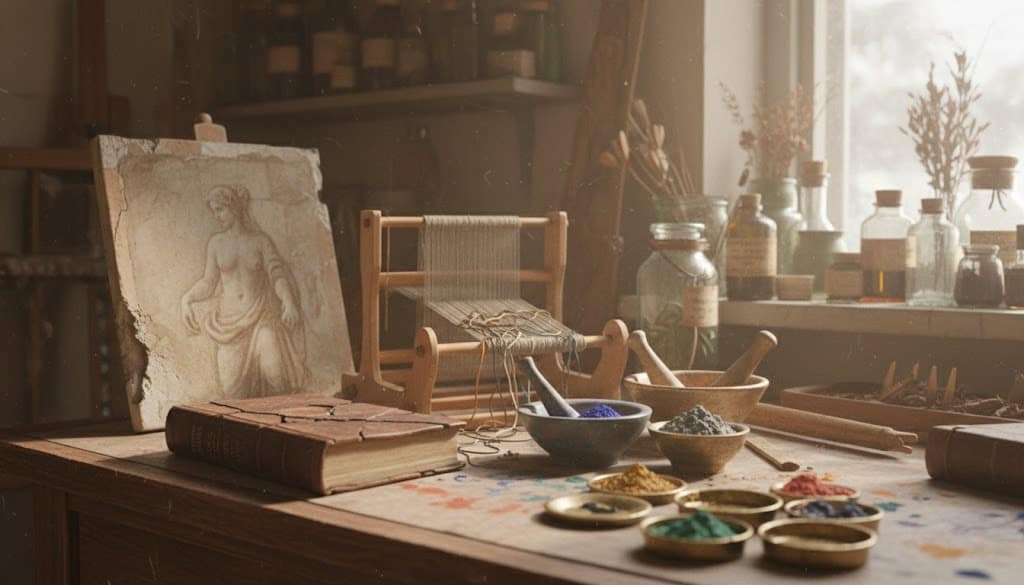
In the fast-paced world of contemporary art, many traditional techniques have been overshadowed by digital tools, mixed media, and conceptual approaches. Yet, within the archives of art history lie methods that were once the backbone of artistic expression—techniques that require patience, mastery, and a tactile connection to materials. Rediscovering these forgotten art methods can not only enrich the skillset of modern artists but also inspire innovative creations that bridge the past and present.
This article explores several nearly-lost traditional art techniques, their historical significance, and ways contemporary artists can revive and adapt them in today’s practice.
Encaustic Painting: Wax as a Medium
History and Technique
Encaustic painting, one of the oldest painting methods, dates back to ancient Greece and Egypt. This technique involves heating beeswax and mixing it with colored pigments before applying it to a surface, typically wood. Artists then use heat tools to manipulate the wax, creating a luminous, textured effect that can last for centuries.
The process requires careful control of temperature and layering, making it both challenging and rewarding. Unlike modern acrylics or oils, encaustic paints dry instantly, allowing for quick layering but demanding precision.
Modern Relevance
Contemporary artists can harness encaustic painting’s unique properties for mixed media projects. Its ability to preserve embedded objects—like photographs or fabric—offers a tactile, three-dimensional quality often absent in digital or flat media. The technique’s durability and depth can make even small pieces feel monumental.
Fresco: Painting on Wet Plaster
Origins and Craftsmanship
Fresco painting is a wall-painting technique in which pigments are applied directly onto wet plaster. The most famous examples are the Renaissance masterpieces of Michelangelo and Giotto. True fresco, or buon fresco, requires applying pigment while the plaster is still damp so the colors chemically bind with the wall, creating a long-lasting image.
This demanding technique requires precise timing, planning, and an understanding of how colors will evolve as the plaster dries.
Why It’s Forgotten
Modern artists often avoid fresco due to its technical difficulty and the permanence of the medium. Unlike canvas or paper, mistakes are difficult to correct, and the process is labor-intensive. Fresco requires physical space, scaffolding, and specialized materials, making it less accessible in a studio setting.
Contemporary Application
However, fresco offers opportunities for site-specific art, murals, and installations. By experimenting with small-scale frescoes or portable plaster panels, modern artists can explore a centuries-old technique while pushing it into new conceptual directions.
Gold Leaf and Gilding: Art in Precious Metals
Technique and Materials
Gold leaf, a technique popularized in religious iconography and medieval manuscripts, involves applying extremely thin sheets of gold to a surface. The process begins with a sticky adhesive layer, known as size, followed by the delicate application of gold sheets and burnishing to create a reflective surface.
Gilding was not limited to gold; silver and other metals were also used. Mastery of this technique demanded dexterity, patience, and an understanding of light and reflection.
Revival in Modern Art
While gold leaf has been largely relegated to decorative crafts, contemporary artists are rediscovering its power for creating visual impact and emphasizing symbolic meaning. Modern applications include abstract painting, sculpture, and even digital mixed media, where gold leaf can be embedded or scanned into digital textures.
Egg Tempera: Vibrancy Through Simplicity
Historical Context
Before oil paints became dominant, egg tempera was the primary medium for panel painting in Europe. Artists mixed pigments with egg yolk to create a fast-drying, vibrant paint that could produce meticulous detail. Famous examples include works by Botticelli and early Renaissance artists.
Technique Details
Egg tempera requires layering fine strokes to achieve depth and luminosity. Its fast-drying nature means blending is minimal, encouraging a highly disciplined, deliberate approach. While it’s labor-intensive, the resulting colors are exceptionally stable over time, retaining their brilliance for centuries.
Modern Implications
Artists today can use egg tempera to explore precision, line work, and color intensity in ways that modern paints cannot replicate. Small-scale studies, illustrative work, and hybrid techniques combining tempera with modern media can breathe new life into this nearly forgotten practice
Sgraffito: Scratching for Texture
Definition and History
Sgraffito, derived from the Italian word for “scratched,” is a technique where layers of colored material—such as plaster, paint, or clay—are applied, then scratched away to reveal underlying layers. It was commonly used in ceramics, wall decoration, and Renaissance paintings.
Technique and Practice
Sgraffito encourages experimentation with texture and contrast. Artists can combine this method with modern paints, ceramics, or mixed media to create layered visual effects that are tactile as well as visual.
Why Modern Artists Should Revisit It
This method allows contemporary artists to rethink surface treatment and layering. Sgraffito’s emphasis on reveal and subtraction can inspire new approaches to storytelling, abstraction, and mixed media experimentation.
Cloisonné and Enamel Work: Colorful Metal Surfaces
Ancient Decorative Techniques
Cloisonné involves creating compartments (cloisons) with metal wires on a surface and filling them with enamel. This technique produces jewel-like, intricate designs that were historically used for religious artifacts, jewelry, and decorative objects.
Technique Complexity
The process is painstaking: after applying enamel powders, the piece is fired in a kiln multiple times to achieve rich, translucent colors. Mistakes are difficult to correct, making it a true test of craftsmanship.
Modern Artistic Potential
Today, cloisonné and enamel techniques inspire fine artists, jewelry makers, and mixed media creators to explore the interplay of metal, color, and light. Even partial adaptation—like enamel accents on contemporary sculpture—can produce striking results.
Reviving Forgotten Techniques in Contemporary Practice
Inspiration From the Past
Modern artists often prioritize speed, versatility, and digital tools, sometimes overlooking tactile, labor-intensive methods. Rediscovering these nearly-lost techniques encourages mindfulness, patience, and a deeper appreciation for materiality.
Combining Old and New
These methods can be integrated with contemporary practices. For instance, encaustic painting can incorporate photographic elements; gilding can be combined with abstract acrylic compositions; egg tempera can inspire digital color palettes. The fusion of old and new creates work that resonates historically yet feels entirely modern.
Practical Tips for Modern Artists
- Start Small – Experiment with miniature panels or portable surfaces to learn traditional methods without committing to large-scale works.
- Study Historical Masters – Analyze historical techniques through museums, online archives, and art treatises.
- Combine Media – Integrate these methods with modern materials like acrylics, resin, or digital prints for hybrid art forms.
- Join Workshops – Many art schools and studios offer courses in traditional techniques, providing hands-on experience.
- Document Your Process – Share your experiments online to inspire others and preserve knowledge of forgotten methods.
Conclusion
Art methods like encaustic painting, fresco, gold leaf, egg tempera, sgraffito, and cloisonné represent a rich, nearly-forgotten heritage of artistic innovation. While they may require patience, technical skill, and dedication, these techniques offer unmatched depth, texture, and historical resonance. By revisiting and adapting these forgotten methods, contemporary artists can create work that bridges centuries, celebrating the tactile, enduring, and experimental spirit of art.
Rediscovering forgotten art methods is not merely about nostalgia—it’s about expanding creative possibilities, connecting with the legacy of the past, and inspiring new, groundbreaking work in the present.